
So I came home today and went to greet my Blue Tongue Delilah and she was making this terrible wheezing sound. I have had her for a while so I am very familiar with her normal sounds. She is a bit anti social so she usually hisses a bit whenever I interact with her. I also know that she has a tiny wheeze that she has always had and I know that sneezing is normal. The sound she made today was different. I could tell she was trying to hiss at me as per usual but it was coming out like a broken up wheeze. It sounds pretty bad but she seems to be moving around normally and her eyes are clear.
Anyway, I immediately gave her a good bath and thoroughly disinfected her entire enclosure and gave her fresh water and food. This was at nighttime so her light was off and the temperature was about 68 degrees. So I'm leaving her light on the rest of the night so it stays toasty on the hot side in case that helps. I'm just very worried and any advice would be appreciated, and yes if it is not better soon I will take her to the vet so I don't need that piece of advice. I would just like to know if this is something to worry about and if anyone knows of any home remedies I could try before going the vet route. Thank you in advance!! Delilah appreciates your help.
Joe
Respiratory infection? Please help!
Forum rules
In this forum all are welcome to ask blue tongue skink-related questions, share information, ideas, tips, experiences, and pictures with fellow BTS enthusiasts.
If you are wondering if your BTS is acting normally or might be sick, this is where you can get help with that.
This is also where you can have some FUN while sharing the enjoyment you get from your blueys!
In this forum all are welcome to ask blue tongue skink-related questions, share information, ideas, tips, experiences, and pictures with fellow BTS enthusiasts.
If you are wondering if your BTS is acting normally or might be sick, this is where you can get help with that.
This is also where you can have some FUN while sharing the enjoyment you get from your blueys!
-
Josephjensen81
- Bluey Beginner

- Posts: 21
- Joined: Mon Mar 28, 2016 5:25 am
- Country:
- Location: United States of America
-
Susann
- ADMIN

- Posts: 4022
- Joined: Mon Mar 22, 2010 12:06 pm
- Country: USA
- Location: Utah
Re: Respiratory infection? Please help!
Hi Joe.
I'm afraid anytime you are dealing with respiratory issues in reptiles it's time to head in to an exotic vet immediately. The reason is that, by the time you see or hear symptoms, it can go downhill very quickly.
I would also suggest finding another option for keeping the heat up at night (if that's what the vet suggests) that doesn't involve leaving her light on, as this can easily cause further stress on a sick animal.
Please give us an update for how things go.
I'm afraid anytime you are dealing with respiratory issues in reptiles it's time to head in to an exotic vet immediately. The reason is that, by the time you see or hear symptoms, it can go downhill very quickly.
I would also suggest finding another option for keeping the heat up at night (if that's what the vet suggests) that doesn't involve leaving her light on, as this can easily cause further stress on a sick animal.
Please give us an update for how things go.
Breeder and keeper of Meraukes from 2010 to 2022.
-
alichamp

- Moderator

- Posts: 749
- Joined: Sun Mar 08, 2015 8:50 pm
- Country: Australia
- Location: NSW
Re: Respiratory infection? Please help!
Great advice from Susann. Options for night heat are a purple/blue or red light heat bulb or a ceramic heat emitter (CHE) which provides heat but no light at all. For these bulbs, you need to set up a second lamp and have them on only at night, keeping your day basking light as normal. You can set up the night heat with a thermostat to make sure the overnight temp doesn't get too low or high.
Also with respiratory infection type symptoms, humidity requirements may need to be addressed. What type of skink do you have? I assume an Indonesian of some kind and these have high humidity requirements so be sure to speak with the vet about this as well as the treatment needed to address the issue.
Let us know once you've been to the vet. There are people on the forum who have experience dealing with humidity and sick skinks so please let us know and we can provide some help and support along the way.
Also with respiratory infection type symptoms, humidity requirements may need to be addressed. What type of skink do you have? I assume an Indonesian of some kind and these have high humidity requirements so be sure to speak with the vet about this as well as the treatment needed to address the issue.
Let us know once you've been to the vet. There are people on the forum who have experience dealing with humidity and sick skinks so please let us know and we can provide some help and support along the way.
-
Josephjensen81
- Bluey Beginner
- Posts: 21
- Joined: Mon Mar 28, 2016 5:25 am
- Country:
- Location: United States of America
Re: Respiratory infection? Please help!
She is a Halmahera Blue Tongue. I think Halmaheras are closely related to Indonesians. Her humidity is about 30%. She has been pretty active today and she sounds a little better. She drank a good amount of water but hasn't eaten today. Should I still take her even if she seems a bit better? I guess I should modify the description of the sound she's making. It's not really a wheeze, it actually sounds exactly like a stuffy nose. Is that still serious?
-
Dakota

- Snail Hunter

- Posts: 5212
- Joined: Fri Mar 01, 2013 3:30 pm
- Your Facebook name: Dakota Nivens
- Country: US
Re: Respiratory infection? Please help!
30% is dangerously low for Halmaheras. I would guess this is cause of the respiratory infection. Veterinary help can only do so much if the conditions that caused the imbalance are not corrected. I keep my Halmaheras at around 80%. Search around on the forum of the various ways people maintain humidity.  Proper substrate mediums, altered ventilation, humidifier, etc.
Proper substrate mediums, altered ventilation, humidifier, etc."The love for all living creatures is the most noble attribute of man." — Charles Darwin
-
alichamp
- Moderator
- Posts: 749
- Joined: Sun Mar 08, 2015 8:50 pm
- Country: Australia
- Location: NSW
Re: Respiratory infection? Please help!
It is really important that you take her to the vet ASAP. She will not get better on her own! And likely get worse. Especially if she has been kept under those conditions.
You need both medical treatment AND to address the husbandry regarding humidity urgently. That's why I suggested a trip to the vet AND discuss enclosure setup/humidity requirements with the vet alongside treatment.
Here is a post on keeping Halmaheras.
And FAQs about care including which substrate is best.
A Halmahera is a type of Indonesian.
Good luck and let us know how it goes.
You need both medical treatment AND to address the husbandry regarding humidity urgently. That's why I suggested a trip to the vet AND discuss enclosure setup/humidity requirements with the vet alongside treatment.
Here is a post on keeping Halmaheras.
And FAQs about care including which substrate is best.
A Halmahera is a type of Indonesian.
Good luck and let us know how it goes.
-
Josephjensen81
- Bluey Beginner
- Posts: 21
- Joined: Mon Mar 28, 2016 5:25 am
- Country:
- Location: United States of America
Re: Respiratory infection? Please help!
Thanks!
Last edited by Josephjensen81 on Tue Mar 29, 2016 12:46 am, edited 1 time in total.
-
Josephjensen81
- Bluey Beginner
- Posts: 21
- Joined: Mon Mar 28, 2016 5:25 am
- Country:
- Location: United States of America
Re: Respiratory infection? Please help!
See, now I'm confused. I just went through my care guide and looked up some other care guides online to try and figure out where I made my mistake. While I couldn't find any care guides on Halmaheras specifically, all of them said for Indonesians humidity should be 40%. 40% is what Delilah is 99% of the time. You guys are saying Halmaheras are a kind of Indonesian but they need 80% humidity. Do you guys have any reputable sources for Halmaheras that you could link me to? No offense but I'm not sure I can trust a user post on a forum over care sheets from reputable reptile magazines and websites. I have had Delilah around 40% humidity for 2 years without a single problem. If my humidity levels are so dangerously low wouldn't there have been an issue 2 years ago? I'm quite confused now.
-
Dakota
- Snail Hunter
- Posts: 5212
- Joined: Fri Mar 01, 2013 3:30 pm
- Your Facebook name: Dakota Nivens
- Country: US
Re: Respiratory infection? Please help!
No offense taken — it is good to be skeptical.
Could you link the caresheets you are referring to?
Like you said, caresheets are very general. Caresheets are made as a foundation, and you build up from it. Each species have different requirements; it isn't one size fits all. Halmaheras are relatively new to the trade, so not much wrote about them specifically. I keep all mine at 80%, but that isn't a necessity. Usually anything above 60% is OK. 30% is a level of humidity a desert-dwelling reptile would experience, not an animal from lowland tropical rainforests of Indonesia, such as Halmaheras. If you use the search function, you will find a lot of information gathered these last couple of years of Halmaheras.
Keep us updated on how the vet visit goes. :-)
Could you link the caresheets you are referring to?
Like you said, caresheets are very general. Caresheets are made as a foundation, and you build up from it. Each species have different requirements; it isn't one size fits all. Halmaheras are relatively new to the trade, so not much wrote about them specifically. I keep all mine at 80%, but that isn't a necessity. Usually anything above 60% is OK. 30% is a level of humidity a desert-dwelling reptile would experience, not an animal from lowland tropical rainforests of Indonesia, such as Halmaheras. If you use the search function, you will find a lot of information gathered these last couple of years of Halmaheras.
Keep us updated on how the vet visit goes. :-)
"The love for all living creatures is the most noble attribute of man." — Charles Darwin
-
Josephjensen81
- Bluey Beginner
- Posts: 21
- Joined: Mon Mar 28, 2016 5:25 am
- Country:
- Location: United States of America
Re: Respiratory infection? Please help!
http://www.reptilesmagazine.com/Care-Sh ... gue-Skink/
"Indonesian, Tanimbar, Irian Jaya, Merauke and Kei Island blue-tongued skinks may prefer slightly higher humidity levels in the 40 to 45 percent range."
http://www.gossreptiles.com/blue_tongue.htm
". NOTE: Indonesian, Tanimbar, Irian Jaya, Merauke, and Kei Island blue tongue skinks may prefer slightly higher humidity in the 40-45% range."
http://digitilian.co.uk/bluetongueskinkcaresheet.html
"Humidity of 20 - 30% is ideal for a Northern BTS though Indonesian will prefer slightly higher levels of about 40%."
https://www.americanmadeexotics.com/blu ... sheet.html
This one specifies Tiliqua gigas gigas at the top.
"moderate humidity level around 40-45%."
http://www.wildchildreptiles.com/portfo ... gue-skink/
"Indonesian, Tanimbar, Irian Jaya, Merauke and Kei Island blue-tongued skinks may need regular misting to reach a humidity levels of 40 to 45, while the Northern skink species only need levels between 25 and 40."
http://reptilerapture.net/blue-tongue-s ... sheet.html
"Northern blues like 25-40% humidity, while more tropical varieties like the Indonesian, Irian Jaya, and others like 40-45% humidity."
"Indonesian, Tanimbar, Irian Jaya, Merauke and Kei Island blue-tongued skinks may prefer slightly higher humidity levels in the 40 to 45 percent range."
http://www.gossreptiles.com/blue_tongue.htm
". NOTE: Indonesian, Tanimbar, Irian Jaya, Merauke, and Kei Island blue tongue skinks may prefer slightly higher humidity in the 40-45% range."
http://digitilian.co.uk/bluetongueskinkcaresheet.html
"Humidity of 20 - 30% is ideal for a Northern BTS though Indonesian will prefer slightly higher levels of about 40%."
https://www.americanmadeexotics.com/blu ... sheet.html
This one specifies Tiliqua gigas gigas at the top.
"moderate humidity level around 40-45%."
http://www.wildchildreptiles.com/portfo ... gue-skink/
"Indonesian, Tanimbar, Irian Jaya, Merauke and Kei Island blue-tongued skinks may need regular misting to reach a humidity levels of 40 to 45, while the Northern skink species only need levels between 25 and 40."
http://reptilerapture.net/blue-tongue-s ... sheet.html
"Northern blues like 25-40% humidity, while more tropical varieties like the Indonesian, Irian Jaya, and others like 40-45% humidity."
-
Dakota
- Snail Hunter
- Posts: 5212
- Joined: Fri Mar 01, 2013 3:30 pm
- Your Facebook name: Dakota Nivens
- Country: US
Re: Respiratory infection? Please help!
I am not going to spend time breaking down what is wrong with those caresheets, but as a whole — they are obsolete, or are relying off obsolete information, such as the Phil Goss one. It was not until a few years ago people realized the importance of humidity levels for the Tiliqua gigas ssp. After all, this is your animal; you can care for it however you like. Consult your vet as to what to do as you are treating your animal before you make any changes in care. I am all for people have different ways of caring for their lizard, but I suggest you rethink the idea 30-40% is ideal for a Halmahera, the most tropical form of Tiliqua.
"The love for all living creatures is the most noble attribute of man." — Charles Darwin
-
Josephjensen81
- Bluey Beginner
- Posts: 21
- Joined: Mon Mar 28, 2016 5:25 am
- Country:
- Location: United States of America
Re: Respiratory infection? Please help!
I guess my issue is that I can't find a single source other than someone in a forum that says anything over 45%. I mean, information on the Internet updates every second of every day yet there are zero care sheets that i can find that say 60 -80% and countless ones that say 40%. I'm not trying to be rude and I'm not saying you're wrong, I just want to see a source. I really want to get this right. I showed you my sources and all the help you have given me is "yeah well they're wrong." I would really like a source I can check out so I can be certain I am giving my Blue Tongue the proper humidity.
-
Dakota
- Snail Hunter
- Posts: 5212
- Joined: Fri Mar 01, 2013 3:30 pm
- Your Facebook name: Dakota Nivens
- Country: US
Re: Respiratory infection? Please help!
You're not being rude at all. Skepticism ≠ rudeness. If you mean sources as in caresheets, I do not have one other than the one posted in the species specific guide on this forum. If you do a quick search, you will see that it is common knowledge within the BTS community that Halmaheras need high humidity. Currently I am working on a website, but it has been in the works for over a year now — likely won't be published for a while to come. I can reference you to information on their native lands, North Maluku (Halmahera) if you'd like. I have many friends in Indonesia I can also reference you to, if that is credible enough. I have over 25 skinks, of 4 subspecies, that originally originate from Indonesia or Papua New Guinea, and I keep them all between 65-82% — Halmaheras being kept the highest.
http://www.worldwildlife.org/ecoregions/aa0106
And slightly irrelevant, but Northerns do not require low humidity like those caresheets suggest. Northerns originate from the northern regions of Western Australia, Northern Territory, and a slight range into Queensland. They reside in the (sub)tropical savanna biome of northern Australia. They also experience a tropical climate, relying off a wet and dry season. What separates them from the Indonesians is that they can tolerate lower humidity. Northerns are the most tropical subspecies in Australia, aside from the Cape York locality of Easterns.
http://www.worldwildlife.org/ecoregions/aa0704
http://www.worldwildlife.org/ecoregions/aa0106
And slightly irrelevant, but Northerns do not require low humidity like those caresheets suggest. Northerns originate from the northern regions of Western Australia, Northern Territory, and a slight range into Queensland. They reside in the (sub)tropical savanna biome of northern Australia. They also experience a tropical climate, relying off a wet and dry season. What separates them from the Indonesians is that they can tolerate lower humidity. Northerns are the most tropical subspecies in Australia, aside from the Cape York locality of Easterns.
http://www.worldwildlife.org/ecoregions/aa0704
Last edited by Dakota on Tue Mar 29, 2016 4:07 am, edited 1 time in total.
"The love for all living creatures is the most noble attribute of man." — Charles Darwin
-
alichamp
- Moderator
- Posts: 749
- Joined: Sun Mar 08, 2015 8:50 pm
- Country: Australia
- Location: NSW
Re: Respiratory infection? Please help!
I understand where you're coming from. I think this is a really great and important conversation so thank you for raising it.
Reptile keeping has grown but still fairly new in popularity. Unfortunately people don't necessarily know these things until they have animals kept in conditions they assume are right and thn the animals start getting sick and dying. Pretty serious trial and error.
This is partly why some very dedicated herpers started this forum to begin with. To link with people who have experience keeping blueys to provide good information based on their knowledge and experience in the hobby, On this forum are very experienced bluey keepers, who have been keeping and breeding many many blueys over many years and have seen and nursed animals that had become sick as a result of environment (Dakota included). Luckily we have the benefit of their experience so we can be better informed and try to avoid tragic outcomes from misinformation and inappropriate husbandry.
It is terrific to be skeptical of information you get within the reptile trade. Many times, especially from the US, people come on to the forum with examples where skinks are sold incorrectly labelled, are fed the wrong things, are labelled 'captive born' when they are actually wild caught imports, and buyers are given bad advice. Like you say, you could not find any specific care information for Halmaheras, but lack of information through omission is not the same as positive knowledge on Halmaheras. In other words, believing that if Halmaheras needed special requirements they would be included in the care sheet otherwise they are the same as other Indonesian species is a falicy. The information from the thread here is not necessarily inconsistent with the care sheet information you have read (though some other info might be). It is, however more specific. Ultimately it is up to you. But you did come for advice. And this is a great place for that.
Perhaps spend some more time reading through the posts - use the search button for things like humidity, mystery illness, pet shops, wild caught etc - to get a feel for the forum and the type of experience and advice given by members.
Reptile keeping has grown but still fairly new in popularity. Unfortunately people don't necessarily know these things until they have animals kept in conditions they assume are right and thn the animals start getting sick and dying. Pretty serious trial and error.
This is partly why some very dedicated herpers started this forum to begin with. To link with people who have experience keeping blueys to provide good information based on their knowledge and experience in the hobby, On this forum are very experienced bluey keepers, who have been keeping and breeding many many blueys over many years and have seen and nursed animals that had become sick as a result of environment (Dakota included). Luckily we have the benefit of their experience so we can be better informed and try to avoid tragic outcomes from misinformation and inappropriate husbandry.
It is terrific to be skeptical of information you get within the reptile trade. Many times, especially from the US, people come on to the forum with examples where skinks are sold incorrectly labelled, are fed the wrong things, are labelled 'captive born' when they are actually wild caught imports, and buyers are given bad advice. Like you say, you could not find any specific care information for Halmaheras, but lack of information through omission is not the same as positive knowledge on Halmaheras. In other words, believing that if Halmaheras needed special requirements they would be included in the care sheet otherwise they are the same as other Indonesian species is a falicy. The information from the thread here is not necessarily inconsistent with the care sheet information you have read (though some other info might be). It is, however more specific. Ultimately it is up to you. But you did come for advice. And this is a great place for that.
Perhaps spend some more time reading through the posts - use the search button for things like humidity, mystery illness, pet shops, wild caught etc - to get a feel for the forum and the type of experience and advice given by members.
-
Dakota
- Snail Hunter
- Posts: 5212
- Joined: Fri Mar 01, 2013 3:30 pm
- Your Facebook name: Dakota Nivens
- Country: US
Re: Respiratory infection? Please help!
I agree with you, alichamp — 100%. It is good to have people question the information being supplied to them.
It is good to have people question the information being supplied to them."The love for all living creatures is the most noble attribute of man." — Charles Darwin
-
Josephjensen81
- Bluey Beginner
- Posts: 21
- Joined: Mon Mar 28, 2016 5:25 am
- Country:
- Location: United States of America
Re: Respiratory infection? Please help!
Well thanks for the advice everyone. This whole humidity issue has just totally caught me off guard. I've been keeping reptiles for 5 years now and currently have 10 and this is my first sick animal. I am well aware of the importance of proper humidity and I'm a pro at maintaining it. I have a Brazilian Rainbow Boa and have never had any difficulty maintaining the high humidity levels required for her. I chalk this issue up to misinformation. I will be increasing Delilah's humidity as a result of our conversation and I've found 2 listings in my area for vets that specialize in reptiles. I'll try to remember to update you guys on what happens. As of right now she's doing great. She's acting and looks exactly as she always does, it's just the stuffy nose sound that gives away that something is up. Honestly, if it weren't for her penchant for hissing at me I would have never known anything was wrong in the first place. I guess her cranky attitude payed off. That's another thing I should ask you. Are Halmaheras usually just more inclined toward anti social behavior?
-
Dakota
- Snail Hunter
- Posts: 5212
- Joined: Fri Mar 01, 2013 3:30 pm
- Your Facebook name: Dakota Nivens
- Country: US
Re: Respiratory infection? Please help!
Josephjensen81 wrote:Are Halmaheras usually just more inclined toward anti social behavior?
Yup, very normal. Just about all of them are caught from the wild, so remain quite defensive. I've noticed even when they are imported as neonates that they tend to be timid and defensive all the way into adulthood. I have raised three from babies, and they still throw huffing fits. Usually it nothing more than a bluff — I pick them up anyways. I do have one that was surrendered to me that is quite evil. I walk by her enclosure, and she usually comes charging at me. She was imported as a baby, too. Finally, I have an adult that is fine with me, but wants to kill every skink he sees. Definitely not known to be that charming. Lol.
"The love for all living creatures is the most noble attribute of man." — Charles Darwin
-
Josephjensen81
- Bluey Beginner
- Posts: 21
- Joined: Mon Mar 28, 2016 5:25 am
- Country:
- Location: United States of America
Re: Respiratory infection? Please help!
I thought so. I've begrudgingly dealt with her attitude and learned to love her. She was sold to me as a Northern and at the time I couldn't tell the difference. Ticks me off. I made the huge mistake of buying her from Petco. After I got her home I realized she had mites which Petco of course refused to take responsibility for and I had to get her treated out of my own pocket. I always figured she was probably wild caught.
-
alichamp
- Moderator
- Posts: 749
- Joined: Sun Mar 08, 2015 8:50 pm
- Country: Australia
- Location: NSW
Re: Respiratory infection? Please help!
Josephjensen81 wrote:She was sold to me as a Northern and at the time I couldn't tell the difference. Ticks me off. I made the huge mistake of buying her from Petco.
Yep, none of the regulars would be at all surprised by this. They are often labelled Australian Northerns (which have to be legitimately captive bred and born to be legal because of Australia's very stringent import/export laws) but are actually wild caught Indonesian skinks. Pet stores don't know and apparently don't care. Very frustrating and disheartening given there are practical requirements in care not likely to be met by either pet store or buyer if they are given the wrong information.
Good luck with Delilah and we do like to know how things work out after a vet visit. Would you post a few pics of her in the meantime for us? :
 We like them and you will at least get an ID on what species she actually is.
-
Josephjensen81
- Bluey Beginner
- Posts: 21
- Joined: Mon Mar 28, 2016 5:25 am
- Country:
- Location: United States of America
Re: Respiratory infection? Please help!
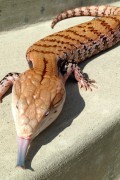
I know she's a Halmahera. They have a very distinctive look, plus I emailed a pic of her to a breeder that deals in Halmaheras and they confirmed it. But just to satisfy your curiosity...sorry it's so zoomed in. I had to crop it a bunch to make the file small enough to be able to post it. My galaxy tab wouldn't let me just reduce the quality for some reason.
You do not have the required permissions to view the files attached to this post.
Return to “General Discussion and FAQ”
Who is online
Users browsing this forum: No registered users and 241 guests