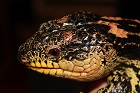
Halmahera Observation Thread

Everything Blue Tongues! Have a question? Just got a BTS and want to introduce yourself? This is the place!
Forum rules
In this forum all are welcome to ask blue tongue skink-related questions, share information, ideas, tips, experiences, and pictures with fellow BTS enthusiasts.
If you are wondering if your BTS is acting normally or might be sick, this is where you can get help with that.
This is also where you can have some FUN while sharing the enjoyment you get from your blueys!
User avatar
Dakota
Snail Hunter
Snail Hunter
Posts: 5212
Joined: Fri Mar 01, 2013 3:30 pm
Your Facebook name: Dakota Nivens
Country: US

Halmahera Observation Thread

Postby Dakota » Mon Aug 25, 2014 4:15 pm

Disclaimer:
This is not a thread discussing whether or not Halmaheras actually deserve their own subspecies recognition. We had enough of that, right? :) I would like to keep this thread strictly on-topic, and not mention anything about subspecies recognition, if that is not too hard to ask for. This is just a thread discussing the behavioral differences they have (among other species in your collection, etc.), typical attitude you find that seems consistent toward various stimuli, color variation among the form, growth rate (if available), etc.. I also ask for people not to criticize one's observations.

It seems to me that Halmaheras are a very "unique" form of T. gigas gigas, thus the reasoning behind creating this thread. So here we go. I really hope this thread makes it, as I would like other people to see how unique these guys really are.

Pictures of the animal you are speaking of would be awesome, as well! :) I guess I will start off:
Circle Sleeping:
I never really took much interest in the "circle" sleeping (after all, I only had 1 at the time, and not a lot of people were keeping them at this time), but when someone on the forum was mentioning how T. nigrolutea (as if they were the only ones that slept like this almost 100% of the time), I was "hey -- Maxx sleeps like this!", and then I got Riley, then Alice, and they all sleep in a circle. I have only seen them just a few times NOT sleeping like this. Sure circle sleeping isn't all the unusual, but this is quite the opposite to the Meraukes and IJ's I have (had), which rarely sleep in a circle, unless cramped into a hide. So far, everyone I have talked to has noticed this sleeping behavior.

Bonding:
A little while after I got Riley, I stuck him and Maxx together, just as a little meet and greet. But to my surprise, Riley seemed to have started following Maxx wherever he went. So, I made the risky decision to house them together, and ever since, they were always found under the same hide, same part of the cage, always in the water dish together, always out roaming together. Now, I know the general rule for Bluetongues is that they do not enjoy each others' company, but after having Halmaheras, I would say that rule doesn't only exclude Shinglebacks and Blotcheds. I have tried to house a pair of Meraukes together, and the response was totally different. They did not care. Sometimes you would find them sleeping together, sometimes not. They were all out at different times, etc.. nothing like I experienced with the Halmaheras. But the Meraukes were always tolerant of each other. I'm not sure if this was just because my Halmaheras were babies, but I have talked to other Halmahera keepers, and they have noticed the exact same thing. Also note, that after so long together, I separated them, and their behavior completely changed. They were always hiding, not really doing anything.. then I put them back together, and back to normal they turn. Please do not think this as advocating to house Halmaheras together, you always run risks, as with all communal housing.

Anti-Sun:
Unlike my Meraukes and IJ's I have (had), my Halmaheras absolutely HATE the sun-shine. Like as soon as you set them down, they go straight for the shade. Now this could have a lot of variables such as too much UV intensity, the extra black on them causing them to heat up faster, etc.. but if I were to guess, I would say Halmaheras probably rarely ever get sun in the wild, but I have no evidence to back this up other than them avoiding the sun as much as possible. As to support the theory of them not getting a lot of sun in the wild, this could be the reason why they are SO black, same as the highland form of T. nigrolutea.

Photo of Maxx:
Image

Photo of Riley:
Image

Photo of Alice:
Image

I'm very interested in what you guys have to add in.
Last edited by Dakota on Tue Aug 26, 2014 12:18 pm, edited 1 time in total.
"The love for all living creatures is the most noble attribute of man." — Charles Darwin
User avatar
SmaugTheBluey
Bluey Beginner
Bluey Beginner
Posts: 135
Joined: Mon Apr 21, 2014 4:56 pm
Country:
Location: Mars

Re: Halmahera Observation Thread

Postby SmaugTheBluey » Mon Aug 25, 2014 6:04 pm

I have heard of a successful cohabitation story with Halmahera bts's from a dude (dunno his name) and they refused to sleep separately and almost refused doing anything independently, and I'm pretty sure once of them died the other one died shortly after. I've got a couple theories for this happening: first and most reasonable they might have Permanente mates such as other subspecies of blue tongues, and the other being that they devolved a buddy system for a defense against animals or being separated from a bigger group, perhaps their subspecies cohabit able. Next their could've been a disease that spreader from one to another or once again as a defense without the other one the animal died from stress. Great thread btw
Roarschak11
Bluey Follower
Bluey Follower
Posts: 310
Joined: Mon Nov 04, 2013 9:42 am
Country:
Location: Nebraska US

Re: Halmahera Observation Thread

Postby Roarschak11 » Mon Aug 25, 2014 6:25 pm

I agree with the circle sleeping! Roar always sleeps like that! As for the sun though, my bud loves being outside in the sun, but rarely ever basks. Since I only have one halamehra though I can't say much...

Oh! My guy has never had an interest in eggs or snails which I thought was odd.

He also is about a year and three months old and about a foot and a half how does that compare to others?
User avatar
Dakota
Snail Hunter
Snail Hunter
Posts: 5212
Joined: Fri Mar 01, 2013 3:30 pm
Your Facebook name: Dakota Nivens
Country: US

Re: Halmahera Observation Thread

Postby Dakota » Mon Aug 25, 2014 6:36 pm

Mine like snails, but don't kill over it like the Meraukes and IJ, now that you mention that.

My Maxx is the exact same age, but he is about to hit 19". Cool observation with the sun. Quick question though, is Nebraska a very sunny place? Or mainly overcast? I ask because Florida (especially) and Tennessee can be rather hot and baking during the summer, so could be due to that.

And I'm thrilled you added that information SmaugTheBluey. When I first noted that behavior, I'm pretty sure everyone shunned me crazy. Now it seems to be pretty consistent among Halmaheras.
"The love for all living creatures is the most noble attribute of man." — Charles Darwin
Roarschak11
Bluey Follower
Bluey Follower
Posts: 310
Joined: Mon Nov 04, 2013 9:42 am
Country:
Location: Nebraska US

Re: Halmahera Observation Thread

Postby Roarschak11 » Mon Aug 25, 2014 8:32 pm

Nebraska is the most bi polar state... Yesterday it was as humid as a bayou and about 100degrees, and today it is a cool 70 with a beautiful breeze...so I'm sure my little guy is thrown off a lot with the weather but I try to get him out a lot on the beautiful days like today.
User avatar
Richard.C
Kimberley Klan
Kimberley Klan
Posts: 10474
Joined: Mon Oct 10, 2005 3:37 am
Country:
Location: melbourne australia

Re: Halmahera Observation Thread

Postby Richard.C » Tue Aug 26, 2014 12:45 am

peoples interperations of whats going on can be way off what exactly is going on

eg earlier post about the 2 halms getting along well,one died then the other,the 2nd i doubt just died because it missed its buddy,id be more inclined to think it died of same thing as first one

also with the they dont like sunlight,how are u testing that??

highland blotchies love sunlight,as most blueys do,not because its nice and bright but for its affect of allowing them to thermo regulate

chuck most blueys outside in the sunlight/out in the open and first thing they do is try and find cover,why????

some get more defensive to when exposed to the sun,why???

alot of folk believe its the uv,but thats not true,its because there out in the open exposed to predetors,with no place to feel secure and an annoying human preventing them from seeking cover

in nature,they dont have to sit out in the open exposed to thermoregulate,often there hides ect allow them to do this in cover,especially animals from tropical locations,in the wild,out in the open puts them at huge risk of predation

also remember just because it may only be 25 degrees out side,doesnt mean the sun cant make basking temps extremely high

as an example recently in my back yard the ground temp in the shade was 6 degrees,in the sun it was 14 but on the besser brick wall it was 50 degrees,all those temps were with in a 2 metre area,air temp was 16 degrees

dakota to test the in sun theory,a large outdoor cage with a heck og a lot of hide areas and shelters would give a more accurate result

also other species sleep in circles and huddled to,my western pr always do,centralians often,northerns and easterns to,plus i have groups together of all aussie species that get along really well together,incliding a few groups of northerns indoors,i have others that hate cage mates to,lots of variables to take into consideration though and how one interperets how there animals are behaving is probably the most variable thing ive seen when it comes to tiliqua in captivity,hugely hugely variable

be interesting to see what others think and if any patterns prevail though
User avatar
DianaBlueTongue
Bluey Enthusiast
Bluey Enthusiast
Posts: 656
Joined: Wed Feb 19, 2014 11:59 am
Country:
Location: Rowland PA

Re: Halmahera Observation Thread

Postby DianaBlueTongue » Tue Aug 26, 2014 6:48 am

All three of my Hallys have always slept in circles too and are the only bts In my collection that do that.

And actually my two baby Hallys, Bery and Ernie, were kept together from day one and I observed the same thing. They did everything together, eat, sleep, explore, bask. Recently my little Ernie, now known as Alice, was sent to join Dakotas gigas family and I have noticed a HUGE difference in Bert, he hides almost all the time, has been picky about eating, and just seems...sad. I know hes not actually sad but for lack of a better word I swear its like he misses his friend.

None of mine like eggs or snails actually. And they don't care for anything that moves either like dubia roaches or live pink mice. My northerns and meraukes go CRAZY for all three treats but the hallys cant be bothered.

One of the things I find quite charming is the tongue. I love how a half pink or white and half blue tongue always seems present in these guys. Very unique!
Last edited by DianaBlueTongue on Tue Aug 26, 2014 6:57 am, edited 1 time in total.
Thousands of candles can be lighted from a single candle, and the life of the candle will not be shortened. Happiness never decreases by being shared.

Buddha
User avatar
DianaBlueTongue
Bluey Enthusiast
Bluey Enthusiast
Posts: 656
Joined: Wed Feb 19, 2014 11:59 am
Country:
Location: Rowland PA

Re: Halmahera Observation Thread

Postby DianaBlueTongue » Tue Aug 26, 2014 6:56 am

Pictured first is my juvie Hally, Bert.

Second is Pancake, a recent rescue Halmahera that came to me in horrible shape but is doing quite well now.
You do not have the required permissions to view the files attached to this post.
Thousands of candles can be lighted from a single candle, and the life of the candle will not be shortened. Happiness never decreases by being shared.

Buddha
User avatar
Dakota
Snail Hunter
Snail Hunter
Posts: 5212
Joined: Fri Mar 01, 2013 3:30 pm
Your Facebook name: Dakota Nivens
Country: US

Re: Halmahera Observation Thread

Postby Dakota » Tue Aug 26, 2014 12:44 pm

I would just like to point out, I did not create this thread to start a debate, just to share experiences, regardless of how we perceived them.

Webbing:
Seems to be pretty consistent with Halmaheras, so I thought I'd add this in. Pictures are of all my Halmaheras' webbing on the head. Alice actually has eyebands, like you would find on some locales of Eastern.

Maxx:
halmahera005.png


Riley:
halmahera003.png


Alice:
halmahera001.png


Belly Pattern:
I'm pretty sure not a lot of people knew this for quite a while, but Halmaheras actually have mostly black bellies. They appear to share this trait with T. nigrolutea.

Maxx:
halmahera006.png


Riley:
halmahera004.png


Alice:
halmahera002.png


Axanthic-"wannabe's":
Another cool thing about Halmaheras, is that when they go into shed, they look like a similar color-phase of the same form.. Axanthic! Obviously you can easily tell the AREN'T true Axanthics by belly color and eye color, but it is always fun to joke about saying you have an Axanthic when they are in shed. I can only find 1 photo right now, but I know I have more somewhere..

Alice:
Image

-------------------------------------------------------------------------------------------------------------------------------------------------
Richard:
Obviously skinks use the sun to thermo-regulate. But most of the time, the Meraukes and IJ's would bask for at least 5-10 in pure baking sun before actively looking to go in the shade, my Halmaheras tend to avoid it like as soon as you put them down. Please note I'm comparing their behaviors with the Meraukes. I am aware of how hot some surfaces can get, I do have a temperature gun. And for the outdoor enclosure suggestion -- I'm working on it, my new house has a fence around it, so I feel pretty good about housing them outside, and I planned to buy a 4' x 8-10' swimming pool for them, but only thing available was 4' x 14' minimum for $300, so I postponed until something smaller and a bit cheaper is available.
-------------------------------------------------------------------------------------------------------------------------------------------------

Has anyone tried feeding your Halmaheras grubs or worms? Mine love them!
You do not have the required permissions to view the files attached to this post.
"The love for all living creatures is the most noble attribute of man." — Charles Darwin
User avatar
DianaBlueTongue
Bluey Enthusiast
Bluey Enthusiast
Posts: 656
Joined: Wed Feb 19, 2014 11:59 am
Country:
Location: Rowland PA

Re: Halmahera Observation Thread

Postby DianaBlueTongue » Tue Aug 26, 2014 3:38 pm

One other thing I've noticed about the Hallys I've had are shorter then normal snouts, kinda like the short snouts you see on centralians but not as blunt. Give them a very distinctive look to the head and face.

Also, most seem to have at least some sort of arrow on the base of the skull down the neck, I always liked that about these guys too. :)
Last edited by DianaBlueTongue on Tue Aug 26, 2014 3:42 pm, edited 1 time in total.
Thousands of candles can be lighted from a single candle, and the life of the candle will not be shortened. Happiness never decreases by being shared.

Buddha
User avatar
DianaBlueTongue
Bluey Enthusiast
Bluey Enthusiast
Posts: 656
Joined: Wed Feb 19, 2014 11:59 am
Country:
Location: Rowland PA

Re: Halmahera Observation Thread

Postby DianaBlueTongue » Tue Aug 26, 2014 3:40 pm

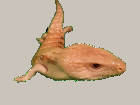
Pancake shed today and snapped a few pics of her outside. In this one you can see her shorter then normal looking snout.
You do not have the required permissions to view the files attached to this post.
Thousands of candles can be lighted from a single candle, and the life of the candle will not be shortened. Happiness never decreases by being shared.

Buddha
User avatar
Richard.C
Kimberley Klan
Kimberley Klan
Posts: 10474
Joined: Mon Oct 10, 2005 3:37 am
Country:
Location: melbourne australia

Re: Halmahera Observation Thread

Postby Richard.C » Wed Aug 27, 2014 12:04 am

Taking blueys outside and letting them cruise around in the sun often leads to them trying to find shelter,doesnt mean they hate the sun,meraukes and ijs are well known to be less irratable than indos,so the getting out of sun more than ij or meraukes could be attributed to that,and just a pretty normal bluey behaviour when brought outside from the comfort of there enclosurewhere they feel safer

Dakota earlier you mentioned blotchies being dark like halms,and also hating the sun,no body has mentioned that to any of my alpine blotchies,they love the sun,only time i see them avoid it is on really stinking hot days,i even have shelters for them to avoid the sun but they usuallu just stay out but move to shaded side of cage when it gets hot,buggers dont even use my hides to brumate in,instead curl up out in the open or in grass

Heres a case point with blueys out in the open,sometimes i take a blotchu out of the outside cage where its active and not trying to flee from me,but when i put it down outside of cage ,and ive done this with a ton of them,they go for the nearest cover,i could say yeah they hate the sun,but inside the cage,there coming over to me and happily sitting out in the sun,basking,exploring,mating,eating,what ever,but pop them down outside of the cage and they want to bugger off
,generally heading for the closest cover,some go from very mellow in cage climbing on you ect to nutty threat displays and swinging around to bite or turning on the speed to flee,its got nothing at all to do with sunlight or uv levels,as all i do is move them less than a metre on other side of cage wall

Now if one does the math theu can clearly see whats going on here,its not sun/uv levels related

The behaviour changing comes down to sticking them out in the open,out of there comfort zone,you have taken away there familiar hides, there escape plans so to speak,they no longer feel very secure
It would be like someone dropping you onto shark infested water 100 metres from shore,are you going to just float there and enjoy the serenity or are you going to head for the nearest cover,and go for shore

Not meaning to sound nitty picky,but to test the sun theory out they really need to have a decent outdoor cage they feel secure in,only that wau will you know for sure if they hate the sun

The behaviours of mine in there outdoor cage to just placing them outside of it is like chalk and cheese and its due to the lack of familiarity and lack of hides when placed outside of cage

I want to say something about the pair bonding to but will leave that for a later time,again not debating anything,this sort of info fascinates me,including the bonding info your referring to,as thats something ive been experimenting with and sounds similar to what im seeing with a few groups of northerns,a species not reccomended to be housed together
dmmalpert
Bluey Beginner
Bluey Beginner
Posts: 2
Joined: Sun Apr 13, 2014 8:50 pm
Country:
Location: Southern California

Re: Halmahera Observation Thread

Postby dmmalpert » Wed Aug 27, 2014 1:26 am

These are some interesting observations. Here are some of my own:

I have 4 Halmaheras. The first one I purchased was my first ever BTS, Puff. I bought him as a newly imported baby and I think I was lucky with him as he grew and thrived. Although he slept in a circle when he was a baby, he is now almost a year old and no longer does so.

My other three are not yet named and are recently imported babies. I have had a harder time with them than I did with Puff as a baby. Two were pretty scared and aggressive when I got them, they are now calming down a bit...though they still charge and whip their tails at me. One is the smallest, and is very sweet...sweeter even than Puff was as a baby.

Overall I find Halmaheras to be much more shy than the other species of BTS I keep, which include northerns, IJs, and Meraukes. If they shrink from sunlight, I would doubt it is because of the light or heat...it is more than likely that they feel vulnerable out in the open. This species seems to have a high flight response and the littlest things will scare them.

I recently moved the 3 babies to larger caging and I am now sorry I did. They hide all the time and it took a few days for them to start eating again once they were moved. The smallest one still is not eating well after being moved.

Overall, based on my observations of them and many other reptiles I have kept, I think halmaheras are more social than other species of BTS. When I first got my baby halmaheras, I had them in small glass tanks, side by side. They could see each other and would stay as close to one another as they could get considering the glass was in the way. All of my northerns are caged separately and they all seem very happy and they are very interactive with me. Although I have been able to calm down my halmaheras, they do not really seem happy to me, which greatly concerns me. Even Puff who has been with me the longest, seemed resigned to his situation, but not really happy. It could just be I am expecting them to act like northerns, when they are not...but I think there is more to it than that. Since I am home all the time and can watch them like hawks, I am going to try an experiment with my two babies that are about the same size and house them together. I will let you know how it works out.

As for food, my baby halmaheras love superworms. And they seem to love fruit as well.
User avatar
Dakota
Snail Hunter
Snail Hunter
Posts: 5212
Joined: Fri Mar 01, 2013 3:30 pm
Your Facebook name: Dakota Nivens
Country: US

Re: Halmahera Observation Thread

Postby Dakota » Wed Aug 27, 2014 3:08 am

Richard, I never said T. nigrolutea didn't like sun.
"The love for all living creatures is the most noble attribute of man." — Charles Darwin
User avatar
El Lobo
The Blotched Brigade
Posts: 3405
Joined: Sat Dec 06, 2008 5:49 pm
Country:
Location: Blue Mountains Australia

Re: Halmahera Observation Thread

Postby El Lobo » Wed Aug 27, 2014 4:55 am

Dakota wrote:Belly Pattern:
I'm pretty sure not a lot of people knew this for quite a while, but Halmaheras actually have mostly black bellies. They appear to share this trait with T. nigrolutea.


I believe T.nigrolutea (Highlands) bellies have more yellow rather than black.
There are 10 kinds of people in the world; those who understand binary and those who do not.
User avatar
Richard.C
Kimberley Klan
Kimberley Klan
Posts: 10474
Joined: Mon Oct 10, 2005 3:37 am
Country:
Location: melbourne australia

Re: Halmahera Observation Thread

Postby Richard.C » Wed Aug 27, 2014 7:15 am

Dakota wrote:Disclaimer:
This is not a thread discussing whether or not Halmaheras actually deserve their own subspecies recognition. We had enough of that, right? :) I would like to keep this thread strictly on-topic, and not mention anything about subspecies recognition, if that is not too hard to ask for. This is just a thread discussing the behavioral differences they have (among other species in your collection, etc.), typical attitude you find that seems consistent toward various stimuli, color variation among the form, growth rate (if available), etc.. I also ask for people not to criticize one's observations.

It seems to me that Halmaheras are a very "unique" form of T. gigas gigas, thus the reasoning behind creating this thread. So here we go. I really hope this thread makes it, as I would like other people to see how unique these guys really are.

Pictures of the animal you are speaking of would be awesome, as well! :) I guess I will start off:
Circle Sleeping:
I never really took much interest in the "circle" sleeping (after all, I only had 1 at the time, and not a lot of people were keeping them at this time), but when someone on the forum was mentioning how T. nigrolutea (as if they were the only ones that slept like this almost 100% of the time), I was "hey -- Maxx sleeps like this!", and then I got Riley, then Alice, and they all sleep in a circle. I have only seen them just a few times NOT sleeping like this. Sure circle sleeping isn't all the unusual, but this is quite the opposite to the Meraukes and IJ's I have (had), which rarely sleep in a circle, unless cramped into a hide. So far, everyone I have talked to has noticed this sleeping behavior.

Bonding:
A little while after I got Riley, I stuck him and Maxx together, just as a little meet and greet. But to my surprise, Riley seemed to have started following Maxx wherever he went. So, I made the risky decision to house them together, and ever since, they were always found under the same hide, same part of the cage, always in the water dish together, always out roaming together. Now, I know the general rule for Bluetongues is that they do not enjoy each others' company, but after having Halmaheras, I would say that rule doesn't only exclude Shinglebacks and Blotcheds. I have tried to house a pair of Meraukes together, and the response was totally different. They did not care. Sometimes you would find them sleeping together, sometimes not. They were all out at different times, etc.. nothing like I experienced with the Halmaheras. But the Meraukes were always tolerant of each other. I'm not sure if this was just because my Halmaheras were babies, but I have talked to other Halmahera keepers, and they have noticed the exact same thing. Also note, that after so long together, I separated them, and their behavior completely changed. They were always hiding, not really doing anything.. then I put them back together, and back to normal they turn. Please do not think this as advocating to house Halmaheras together, you always run risks, as with all communal housing.

Anti-Sun:
Unlike my Meraukes and IJ's I have (had), my Halmaheras absolutely HATE the sun-shine. Like as soon as you set them down, they go straight for the shade. Now this could have a lot of variables such as too much UV intensity, the extra black on them causing them to heat up faster, etc.. but if I were to guess, I would say Halmaheras probably rarely ever get sun in the wild, but I have no evidence to back this up other than them avoiding the sun as much as possible. As to support the theory of them not getting a lot of sun in the wild, this could be the reason why they are SO black, same as the highland form of T. nigrolutea.

Photo of Maxx:
Image

Photo of Riley:
Image

Photo of Alice:
Image

I'm very interested in what you guys have to add in.


Last paragraph in the anti sun section of this post,as to suport this theory of them not getting much sun in the wild,this could be the reason they are so black,same as the highland form of blotch bluey
User avatar
DianaBlueTongue
Bluey Enthusiast
Bluey Enthusiast
Posts: 656
Joined: Wed Feb 19, 2014 11:59 am
Country:
Location: Rowland PA

Re: Halmahera Observation Thread

Postby DianaBlueTongue » Wed Aug 27, 2014 7:29 am

" but if I were to guess, I would say Halmaheras probably rarely ever get sun in the wild, but I have no evidence to back this up other than them avoiding the sun as much as possible. As to support the theory of them not getting a lot of sun in the wild, this could be the reason why they are SO black, same as the highland form of T. nigrolutea."

I think Dakota was just making an observation seeing how he started off "if I were to guess". He also said "it could be the reason" not it is the reason. Theres probably no way to prove that in either direction anyway but hearing lots of different opinions and observations from folks instead of just rebuttals about whats already been stated would be really helpful in coming up with multiple theories and ways to test them.

None of my halmaheras seem to enjoy the sun either. They won't even bask the way my northerns do, I had to put a pile of fake foliage directly underneath their basking lamps to get them to bask. I think the avoidance of open spaces and direct light goes back to their seemingly more shy nature compared to a lot of the aussie bts.
Thousands of candles can be lighted from a single candle, and the life of the candle will not be shortened. Happiness never decreases by being shared.

Buddha
User avatar
Dakota
Snail Hunter
Snail Hunter
Posts: 5212
Joined: Fri Mar 01, 2013 3:30 pm
Your Facebook name: Dakota Nivens
Country: US

Re: Halmahera Observation Thread

Postby Dakota » Wed Aug 27, 2014 8:38 am

I was saying that they were both darker probably due to being where the climate is not warm or not a lot of sunshine is provided, and they utilize the black scales to absorb heat when available. I did not once say Blotcheds did not like sun. Richard, this is exactly why I messaged you the other day.

And if I see my Halmahera's basking while inside that lets me know that it is colder than it should be. Under the condions that Halmahera do not bask, the Meraukes will still bask. This is with an 80 ambient and 100 basking spot. I guess that is due to being too scared, huh..
"The love for all living creatures is the most noble attribute of man." — Charles Darwin
User avatar
Richard.C
Kimberley Klan
Kimberley Klan
Posts: 10474
Joined: Mon Oct 10, 2005 3:37 am
Country:
Location: melbourne australia

Re: Halmahera Observation Thread

Postby Richard.C » Wed Aug 27, 2014 6:37 pm

Im not sure dakota,just offering some other possabilities as to why they may not openly bask for you,a few people have posted that theres do,and that also there a much timider species than northerns and ijs and meraukes and tend to flee more,and even will happily bask if the basking spot has something coveting it a bit so they can feel secure

If your temps run from 80 minimum up to 100 basking spot temp im not suprised they dont bask much,thats pretty warm and when at preffered body temp which isnt to fat higher than your min temp,would be easy for them to maintain preffered body temp with needing to bask alot
User avatar
Dakota
Snail Hunter
Snail Hunter
Posts: 5212
Joined: Fri Mar 01, 2013 3:30 pm
Your Facebook name: Dakota Nivens
Country: US

Re: Halmahera Observation Thread

Postby Dakota » Wed Aug 27, 2014 6:48 pm

Note that 80 degrees is room temperature in south Florida, so it is a "cool" 80 degrees (cooler air circulating).

Also, keep in mind, the Meraukes and IJ still bask under these exact same conditions.
"The love for all living creatures is the most noble attribute of man." — Charles Darwin

Return to “General Discussion and FAQ”

Who is online

Users browsing this forum: No registered users and 223 guests