
 ), what they thought of them, if there's anyone stateside to trade offspring with, etc....
T.r.palarra
Forum rules
In this forum all are welcome to ask blue tongue skink-related questions, share information, ideas, tips, experiences, and pictures with fellow BTS enthusiasts.
If you are wondering if your BTS is acting normally or might be sick, this is where you can get help with that.
This is also where you can have some FUN while sharing the enjoyment you get from your blueys!
In this forum all are welcome to ask blue tongue skink-related questions, share information, ideas, tips, experiences, and pictures with fellow BTS enthusiasts.
If you are wondering if your BTS is acting normally or might be sick, this is where you can get help with that.
This is also where you can have some FUN while sharing the enjoyment you get from your blueys!
-
scaredofbees
- Bluey Addict

- Posts: 121
- Joined: Tue Jan 11, 2011 8:27 am
- Country: US
- Location: Pittsburgh
- Contact:
T.r.palarra
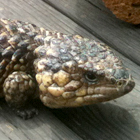
In my ongoing search for a male for my female aspera, I've also become interested in the other shingleback subspecies, T.r.palarra. I was wondering if anyone on the forum kept them (other than the #1 European breeder of said species ), what they thought of them, if there's anyone stateside to trade offspring with, etc....
), what they thought of them, if there's anyone stateside to trade offspring with, etc....0.1 Tiliqua rugosa aspera
-
Jeff

- Vladik Pippery

- Posts: 5684
- Joined: Thu Sep 18, 2008 3:33 pm
- Country:
- Location: Arizona, USA
- Contact:
Re: T.r.palarra
The only one that I know in the States that keeps them is Tula_girl on the forum. She does not post much, but may respond to a pm or email. She has one pair of palarra that she got in two different years from pipa.
I have no first hand experience with palarra, but from talking to 3 people who keep them, it sounds to me like they are very similar to T.r.rugosa in pretty much every way. I guess it's not surprising that some people question whether they should have a separate sub-species designation from rugosa. Other than the slight difference in the taper of their tail, I think the geographic separation of their ranges is the main reason they are considered a separate sub-species.
Here is a thread about Fred's in the Netherlands: viewtopic.php?f=4&t=21440
I have no first hand experience with palarra, but from talking to 3 people who keep them, it sounds to me like they are very similar to T.r.rugosa in pretty much every way. I guess it's not surprising that some people question whether they should have a separate sub-species designation from rugosa. Other than the slight difference in the taper of their tail, I think the geographic separation of their ranges is the main reason they are considered a separate sub-species.
Here is a thread about Fred's in the Netherlands: viewtopic.php?f=4&t=21440
6.10.9 T. s. intermedia
2.2.7 T. s. scincoides
1.2.1 T. nigrolutea
2.2.0 T. r. rugosa
1.2.3 T.g. keyensis
2.0.5 T.s. chimaera
0.0.0. T. occipitalis
0.0.0. T. multifasciata
http://www.btskinks.com
https://www.facebook.com/pages/Bluetong ... 846297977#
2.2.7 T. s. scincoides
1.2.1 T. nigrolutea
2.2.0 T. r. rugosa
1.2.3 T.g. keyensis
2.0.5 T.s. chimaera
0.0.0. T. occipitalis
0.0.0. T. multifasciata
http://www.btskinks.com
https://www.facebook.com/pages/Bluetong ... 846297977#
-
scaredofbees
- Bluey Addict
- Posts: 121
- Joined: Tue Jan 11, 2011 8:27 am
- Country: US
- Location: Pittsburgh
- Contact:
Re: T.r.palarra
Awesome Jeff, thanks again! From what I understand they are slightly smaller than rugosa and apparently, out of the 4 subspecies, the least difficult to breed. It seems as long as they are young, healthy and cycled properly, not as much emphasis is put on pair compatibility.
0.1 Tiliqua rugosa aspera
Return to “General Discussion and FAQ”
Who is online
Users browsing this forum: No registered users and 172 guests