
Hi,
Today, my girlfriend and I bought 2 animals that were supposed to be Tiliqua scincoides scincoides, CB adults of 6 years of age, and proven breeders. But, after seeing some pics in this wonderful website, I have my doubts.
Please, could you help me to identify this 2 animals? I'm between eastern (T. s. scincoides) and Irian Jaya.
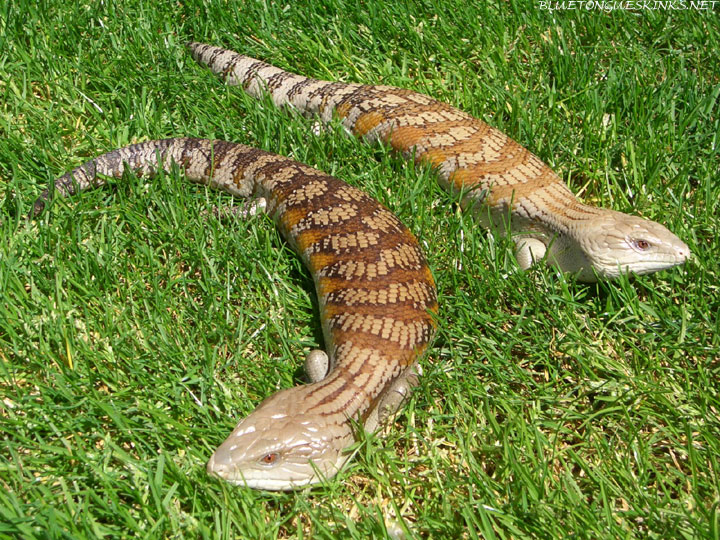
Animal 1:
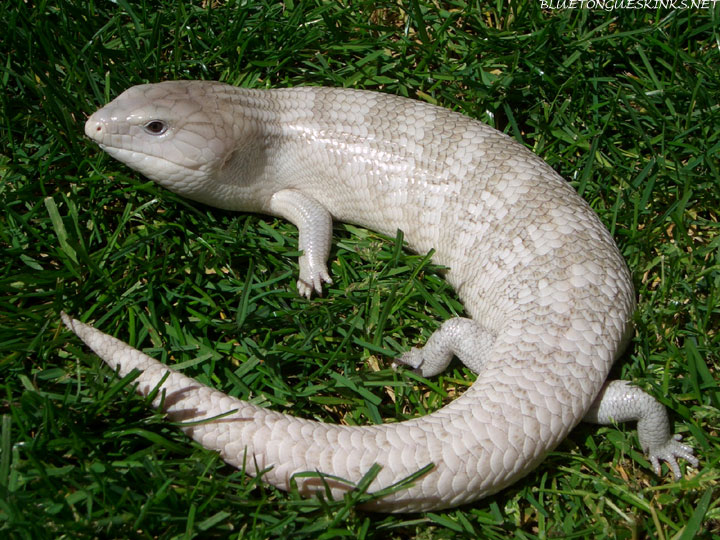
Animal 2:
In case it helps, one of their babies:
Thank you!!
Species ID: eastern or irian jaya
Forum rules
In this forum all are welcome to ask blue tongue skink-related questions, share information, ideas, tips, experiences, and pictures with fellow BTS enthusiasts.
If you are wondering if your BTS is acting normally or might be sick, this is where you can get help with that.
This is also where you can have some FUN while sharing the enjoyment you get from your blueys!
In this forum all are welcome to ask blue tongue skink-related questions, share information, ideas, tips, experiences, and pictures with fellow BTS enthusiasts.
If you are wondering if your BTS is acting normally or might be sick, this is where you can get help with that.
This is also where you can have some FUN while sharing the enjoyment you get from your blueys!
-
Corvinus
- Bluey Beginner

- Posts: 2
- Joined: Thu Mar 21, 2013 11:16 am
- Country:
- Location: Spain
Species ID: eastern or irian jaya
You do not have the required permissions to view the files attached to this post.
-
xxmonitorlizardxx

- Walks with Squirrels

- Posts: 4050
- Joined: Mon Apr 26, 2010 7:06 pm
- Your Facebook name: Jeremy Johnson
- Country:
- Location: NJ, USA
Re: Species ID: eastern or irian jaya
I am having a hard time identifying the first animal, but it appears to be an Irian Jaya.
The second animal though is most definitely an Irian Jaya.
The second animal though is most definitely an Irian Jaya.
-
donkeybuff

- Coffee Connoisseur
- Posts: 1592
- Joined: Sat Jan 07, 2012 8:56 pm
- Country: USA
- Location: California
Re: Species ID: eastern or irian jaya
They both look Irian Jaya to me.
Sachin
1.0 Indonesian
1.0 Northern
1.0 Indonesian
1.0 Northern
-
taniya91
- Bluey Beginner
- Posts: 234
- Joined: Mon Aug 20, 2012 7:00 pm
- Country:
- Location: saint louis
Re: Species ID: eastern or irian jaya
are all the white speckles bedding?
i would say IJ but i agree that the first one is kind of hard
i would say IJ but i agree that the first one is kind of hard
-
Zach

- Grand Cicada

- Posts: 7550
- Joined: Mon Jan 12, 2004 8:38 pm
- Country:
- Location: Orygun
- Contact:
Re: Species ID: eastern or irian jaya
Sorry, definitely not Easterns.  (T. scincoides scincoides)
(T. scincoides scincoides)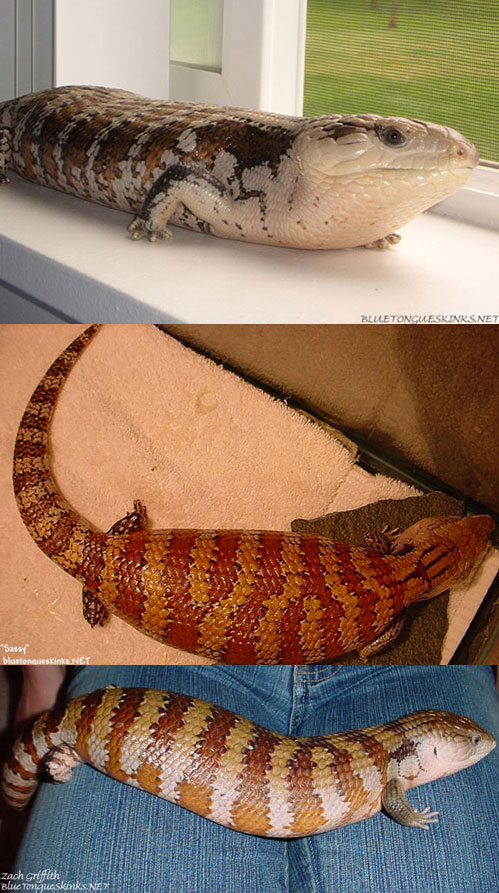

-
Corvinus
- Bluey Beginner
- Posts: 2
- Joined: Thu Mar 21, 2013 11:16 am
- Country:
- Location: Spain
Re: Species ID: eastern or irian jaya
Thank you guys 
Well, it appears they're IJ, that could be irrelevant or bad. I was looking for easterns because they seem more "cold tolerant" to me, but as long as I can apply the temperature parameters of the caresheet, I don't mind, because they're gorgeous creatures.
So the question is, can this statement be extrapolated to IJ as well? I suppose the low limit of 40F in brumation is out of the question, even brumation at all.
The common sense says to me that you can't keep a tropical/subtropical species on that temperature range at night, but then, even in that part of the world, there are extremely cold places like high mountains, and if IJ is really an indonesian-eastern hybrid, maybe they can withstand some coldness. Summary: does anyone really know what temperature range they experience in nature?
I mean, as a totally different example, I've seen some people keeping Istiurus lesueurii (formerly Physignathus lesueurii) like they were a fragile species, with "safe" temps range; sure, they grow and maybe even breed with some temp drop, I don't know, but the truth is that they can survive very very low temps without harm. What I'm trying to say is, the fact that "most people" keep them in a T range, doesn't mean that they can't do well in another, and I just want to provide the more natural conditions, because I think that the "low temp night rest" it'd better for them on the long term.
Anyway, yesterday they were happily feeding with house temps, so maybe they're not that picky!
To finish, aside from the above, two more questions:
- What keys did you use to ID the skinks as IJ? Can I do something to completely identify the first animal?
- The photos doesn't seem to reflect the real colors, I'd say that at least the first animal is more grayish. Do you want me to take another pics?
PS: taniya91, yes, the white speckles from the first animal's head were part of the old bedding .
Well, it appears they're IJ, that could be irrelevant or bad. I was looking for easterns because they seem more "cold tolerant" to me, but as long as I can apply the temperature parameters of the caresheet, I don't mind, because they're gorgeous creatures.
One thing that a lot of people don't realize is that BTS can take the cold—60's-70's during the night will not hurt them at all.
So the question is, can this statement be extrapolated to IJ as well? I suppose the low limit of 40F in brumation is out of the question, even brumation at all.
The common sense says to me that you can't keep a tropical/subtropical species on that temperature range at night, but then, even in that part of the world, there are extremely cold places like high mountains, and if IJ is really an indonesian-eastern hybrid, maybe they can withstand some coldness. Summary: does anyone really know what temperature range they experience in nature?
I mean, as a totally different example, I've seen some people keeping Istiurus lesueurii (formerly Physignathus lesueurii) like they were a fragile species, with "safe" temps range; sure, they grow and maybe even breed with some temp drop, I don't know, but the truth is that they can survive very very low temps without harm. What I'm trying to say is, the fact that "most people" keep them in a T range, doesn't mean that they can't do well in another, and I just want to provide the more natural conditions, because I think that the "low temp night rest" it'd better for them on the long term.
Anyway, yesterday they were happily feeding with house temps, so maybe they're not that picky!
To finish, aside from the above, two more questions:
- What keys did you use to ID the skinks as IJ? Can I do something to completely identify the first animal?
- The photos doesn't seem to reflect the real colors, I'd say that at least the first animal is more grayish. Do you want me to take another pics?
PS: taniya91, yes, the white speckles from the first animal's head were part of the old bedding .
-
Richard.C

- Kimberley Klan

- Posts: 10474
- Joined: Mon Oct 10, 2005 3:37 am
- Country:
- Location: melbourne australia
Re: Species ID: eastern or irian jaya
both ij,s
with tropical animals u can just drop noght temps low to successfully cycle them,maybe drip day temps a smidge,particularilyback ground temps,but i think most importantly the cooler night temps like alot of folk cycle pythons
in saying that,alot of keepers have good success dropping heat down fully as well,lots of variables to how you go about it i guess,your local climate can play a big role to
with tropical animals u can just drop noght temps low to successfully cycle them,maybe drip day temps a smidge,particularilyback ground temps,but i think most importantly the cooler night temps like alot of folk cycle pythons
in saying that,alot of keepers have good success dropping heat down fully as well,lots of variables to how you go about it i guess,your local climate can play a big role to
Return to “General Discussion and FAQ”
Who is online
Users browsing this forum: No registered users and 364 guests