
rugosa aspera experiment
Forum rules
In this forum all are welcome to ask blue tongue skink-related questions, share information, ideas, tips, experiences, and pictures with fellow BTS enthusiasts.
If you are wondering if your BTS is acting normally or might be sick, this is where you can get help with that.
This is also where you can have some FUN while sharing the enjoyment you get from your blueys!
In this forum all are welcome to ask blue tongue skink-related questions, share information, ideas, tips, experiences, and pictures with fellow BTS enthusiasts.
If you are wondering if your BTS is acting normally or might be sick, this is where you can get help with that.
This is also where you can have some FUN while sharing the enjoyment you get from your blueys!
-
Richard.C

- Kimberley Klan

- Posts: 10474
- Joined: Mon Oct 10, 2005 3:37 am
- Country:
- Location: melbourne australia
rugosa aspera experiment
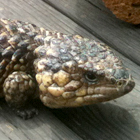
still in brumation ,pretty active for no heating,they were shut down fully when kings and major skinks were woken,they had male kimberley northern in with them,hence hadnt shut off day heating,though a couple curled up down cool end anyways
these guys have always remained active every srason i shut them down,normaly still going to basking area every day even with no heating,staying wide eyed and alert,but sluggish
anyways ill return heat in a couple of weeks and see what happens,theres 2 female 2 males and a young female
You do not have the required permissions to view the files attached to this post.
-
Lea

- Patron Saint of Blueys
- Posts: 4261
- Joined: Fri Sep 08, 2006 4:01 am
- Country:
- Location: Adelaide, South Australia
Re: rugosa aspera experiment
It's going to be interesting to see all your experiments with heating after brumation. Not being a breeder, it's great being able to learn through your experiences as to what works and what doesn't and how each skink reacts to the changes.
I think the shinglebacks are probably the most active during brumation. I saw wild ones well into may this year and mine failed to settle down completely, getting up with the slightest slip of sunshine to bask and loll about. They didn't do much, except a lap of the enclosure and sleep in the sunshine, but I've seen them all at least once a week for the whole season, so far. Contrary to this, Kiah the eastern, bedded down in April and I might have seen him once or twice, but not for a good while now. Even though they share the same climate, their behaviour contrasts remarkably.
I think the shinglebacks are probably the most active during brumation. I saw wild ones well into may this year and mine failed to settle down completely, getting up with the slightest slip of sunshine to bask and loll about. They didn't do much, except a lap of the enclosure and sleep in the sunshine, but I've seen them all at least once a week for the whole season, so far. Contrary to this, Kiah the eastern, bedded down in April and I might have seen him once or twice, but not for a good while now. Even though they share the same climate, their behaviour contrasts remarkably.
Shinglebacks - Nippy, Lava, Suunto, Lutea, and Hermione
Easterns - Kiah and Jade
Easterns - Kiah and Jade
-
scaredofbees
- Bluey Addict

- Posts: 121
- Joined: Tue Jan 11, 2011 8:27 am
- Country: US
- Location: Pittsburgh
- Contact:
Re: rugosa aspera experiment
My apsera were also somewhat active during brumation. Every day, I'd find them in a different area of the enclosure. I began winding down the lights and temps for mine in November. By the end of that month, there was no heat or light. Temps would range between 55-60F (12-15C). I taped cardboard to the glass areas of the enclosure. The only light would be the indirect lighting that would occasionally come on when I went in the room. By the end of February, they became very active on their own, so I slowly brought the heat and light back up. After the temperature and lighting returned to normal for about a week, I offered food.
By the way, I really like the look of your shinglebacks!
By the way, I really like the look of your shinglebacks!
0.1 Tiliqua rugosa aspera
Return to “General Discussion and FAQ”
Who is online
Users browsing this forum: Bing [Bot] and 171 guests